DISSEMINATING

FALSE INFORMATION
VIOLENCE
VIOLENCE
THEFT
THEFT
NEGLECT
NEGLECT
DEFAMATION
DEFAMATION
□ § I — EARLY CHILDHOODGrowing Up With Nonverbal Autism & Experiencing Violence Before I Could Explain What Had Happened
-
I am autistic, and during my early childhood I was nonverbal. I was unable to communicate through ordinary speech until approximately the age of seven and underwent around six years of speech and language therapy thereafter.
This meant that, as a young child, I could not easily explain when I was frightened, uncomfortable, hurt, or mistreated. I depended heavily on adults to recognize my needs and interpret my behavior. If something happened when no trustworthy adult witnessed it, I had very limited ability to describe the event afterward.
My inability to speak is important context for the earliest incidents documented in this dossier. Long before I was capable of giving a detailed account of what had happened to me, I was already dependent on adults whose actions I could not meaningfully report.
-
My experience at Killgore Kiddie Kamp was not defined by one isolated incident. Physical punishment and violence were recurring parts of my time there. I was approximately four years old, autistic, and nonverbal. I could cry, resist, or show that I was afraid, but I could not go home afterward and explain in words what an adult had done to me.
I remember being hit, kicked, and spanked by adults responsible for caring for me. These were not occasional taps or ordinary attempts at discipline. I remember being physically hurt deliberately and repeatedly, even while I was crying.
One woman in particular regularly hurt me during nap time. I have a surviving photograph of her, although I do not know her name. During nap periods, she would change my diaper and then repeatedly hit and spank me. She also kicked me. I remember lying there crying while she continued. My crying did not make her stop. My distress did not make her stop. The fact that I was a very young child did not make her stop.
This happened regularly enough that the violence itself became familiar. I remember episodes of being struck over and over again, sometimes hundreds of times. I remember waiting for it to end. I remember crying and understanding only that the adult caring for me was intentionally causing me pain.
The abuse I remember at Killgore was physical, not sexual. I do not remember being sexually abused there. The physical contact I describe was intended to punish, humiliate, restrain, or hurt me.
Another incident remains particularly vivid.
I desperately needed to use the bathroom but was not allowed to go. Eventually, I could no longer hold it and urinated on myself and onto the carpet.
I was four years old.
An adult woman responded by grabbing me and throwing me down onto the same carpet where I had urinated. She forced the right side of my face against the wet carpet and rubbed my cheek through my own urine. She told me to look at what I had done and to feel what I had done.
Then she hurt me.
I remember being kicked and struck while I was already on the floor. I remember the humiliation of having my face pushed into the place where I had just had an accident. I remember being treated as though I had committed some terrible offense when I was a preschool-aged child who had needed to use a bathroom.
There was nothing remotely proportionate about the response. A four-year-old wetting himself is not an act of aggression, defiance, or wrongdoing. I needed a bathroom. I had an accident. An adult chose to answer that accident with violence and humiliation.
What makes this memory especially infuriating to me now is how powerless I was.
I could not explain myself before it happened. I could not meaningfully defend myself while it was happening. And afterward, I could not return home and clearly tell my parents, “An adult at daycare threw me down, rubbed my face in urine, kicked me, and hurt me.”
I did not yet have those words.
The adults did.
They had the ability to speak, explain, deny, minimize, and define what had happened. I was the child being hurt, yet I was the person least capable of giving an account of it.
That imbalance is central to why I document these experiences now. I eventually learned how to speak. I eventually gained the language to describe violence, humiliation, fear, and abuse. But by the time I had those words, the adults who hurt me were long gone from my daily life and Killgore Kiddie Kamp had ceased operating.
I am writing down now what I could not say then.
-
For years, I grew up without consciously thinking about what had happened to me at Killgore Kiddie Kamp.
The memories were not completely absent. Around fourth and fifth grade, I remember beginning to talk about having been hurt there. But those attempts never developed into a serious conversation or investigation. They were quickly dismissed and suppressed amid the instability already surrounding my family, including my mother’s relationship with Gavin. I was still a child, and the possibility that I had been abused years earlier was never meaningfully pursued.
Eventually, I stopped talking about it.
I grew older. Years passed. I went through middle school and adolescence without regularly thinking about Killgore or the adults who had hurt me there. The experiences existed somewhere in my past, but they were not part of my everyday conscious memory.
Then, on November 9, 2024, I remembered.
The memories of Killgore returned to my attention: being hit and kicked, being repeatedly spanked during nap time, crying while an adult continued hurting me, and being forced face-down against the wet carpet after I had urinated on myself.
By then, I was no longer the four-year-old child who could not speak.
I had words.
I could finally describe what I remembered happening to me, understand how abnormal it was, and ask the adults who had been responsible for protecting me why nothing had been done.
My mother denied that the abuse occurred. She did not investigate what I told her, attempt to identify the adults involved, seek records, contact anyone associated with the former daycare, or otherwise take action in response to my account.
My father’s response was different. He did not simply tell me that I was lying, and he appeared to have some vague memory of the women I described. But he also declined to pursue the matter.
On April 29, 2026, after thinking about the events again, I contacted my father and raised the abuse with him once more.
He wrote:
He later told me:
Those messages remain difficult for me to read.
I had spent years without the ability to describe what happened. When I was four, I could not come home and explain that adults responsible for my care were hitting me. When I became old enough to speak about it, the issue disappeared into the chaos of my childhood. When I finally confronted my parents again as a teenager, I was still effectively told that nothing needed to be done.
The suggestion that I should simply trust “karma” was especially painful. I was not asking for cosmic punishment. I was asking the adults who had been responsible for me to acknowledge that a child may have been repeatedly assaulted while under the supervision of other adults and to treat that allegation seriously.
Being told that I had nevertheless grown into “a fine young man” did not resolve what happened. My ability to grow up, function, attend school, or build a future does not retroactively make violence against a four-year-old less serious.
Nor does the passage of time erase the fact that, when I was most incapable of protecting or explaining myself, the adults around me failed to recognize what was happening.
I could not pursue accountability when I was four.
I could not even explain what had been done to me.
By the time I could, Killgore Kiddie Kamp had been closed for years, the adults involved had disappeared from my life, and the people I turned to for help were unwilling to act.
That is why I am documenting it now.
-
A photograph posted to Killgore Kiddie Kamp’s Facebook page on May 30, 2014 shows three staff members. The accompanying post reads, “Goodbye Teacher Pam, Teacher Connie and Teacher Rose.” If the names correspond to the women from left to right, they would be Pam, Connie, and Rose respectively, although I have not independently confirmed this.
I recognize the older woman on the left as the adult involved in the incident in which I was forced onto the urine-soaked carpet and physically assaulted after wetting myself.
I recognize the woman in the center as the adult I remember regularly hitting, spanking, and kicking me during nap time and diaper changes.
I do not remember the woman on the right or associate her with any abusive incident.
The photograph therefore helps connect the adults I remember from Killgore Kiddie Kamp with possible first names, but their full identities and the ordering of the Facebook caption remain unverified.
-
Killgore Kiddie Kamp later ceased operations.
According to a post published on the daycare's Facebook page on May 27, 2014:
The closure occurred only a few years after the period in which I attended the daycare. I currently do not know the circumstances that led to its closure, and I do not claim that the closure was connected to my experience.
□ § II — HOUSEHOLD INSTABILITYLosing a Stable Home and Growing Up Around Violence, Drug Addicts, and Hunger
-
Around 2015–2016, my parents divorced. The original arrangement was that I would live with my mother during the week and stay with my father on weekends.
In practice, that arrangement was not consistently followed. My mother became my primary caregiver and exercised the greatest control over where I lived, who supervised me, who entered our home, and the conditions in which I was raised.
My father remained in my life, but he lived separately and was not consistently present enough to provide an alternative home environment or intervene in what was increasingly happening at my mother’s house.
As a result, the decisions my mother made about her lifestyle, relationships, and the people she allowed into our home had a direct and overwhelming effect on my childhood.
-
After the divorce, my mother began bringing groups of men associated with hippie and countercultural communities into our house. They smoked marijuana indoors and used other drugs that I understood to be illegal, although I was too young to identify every substance. Some stayed for extended periods. Some effectively squatted on the property.
When I asked them not to smoke near my bedroom or to take it outside, they screamed at me and threatened to kick me out of my own home.
Their behavior became even more disturbing when my mother physically abused me.
I remember my mother punching and kicking me until I bled from my mouth and nose. Instead of stopping her, some of these adults encouraged her. They cheered while she hurt me. One man directly told me that he enjoyed watching my mother kick me, that it was pleasurable for him, and that he wanted her to continue doing it for fun.
I was approximately in fifth grade.
One of these men, Jason Douglass, stayed on the property in a tiny trailer parked directly in front of our house. My mother nevertheless entrusted him with caring for me for extended periods. There were times when he apparently ran out of food-assistance benefits and could not adequately feed us. I remember him ordering me not to drink “his milk” from the refrigerator.
It was my house. I was the child who lived there. He was an unrelated adult staying on the property, yet I was being told I could not drink milk from my own refrigerator.
Another woman once gave me what she represented as water. After drinking it, I realized it was vodka. When I complained that it tasted disgusting, she responded, “Fuck you, you drank it.” She then threatened to tell my mother, turning something she had done to me into something I was supposed to fear being punished for.
Adults used drugs in my home. They threatened to throw me out when I objected. They restricted my access to food. An adult gave me alcohol without telling me what I was drinking. Some watched my mother physically attack me and openly encouraged her to continue.
The people who should have been outsiders were given extraordinary freedom inside my home.
I was the child who lived there, and increasingly, I was the person with the least power in it.
-
My mother refused to maintain regular employment and instead converted the front portion of our family home into an Airbnb for income. As a result, paying strangers were given the normal house while I was pushed into the rear of the property.
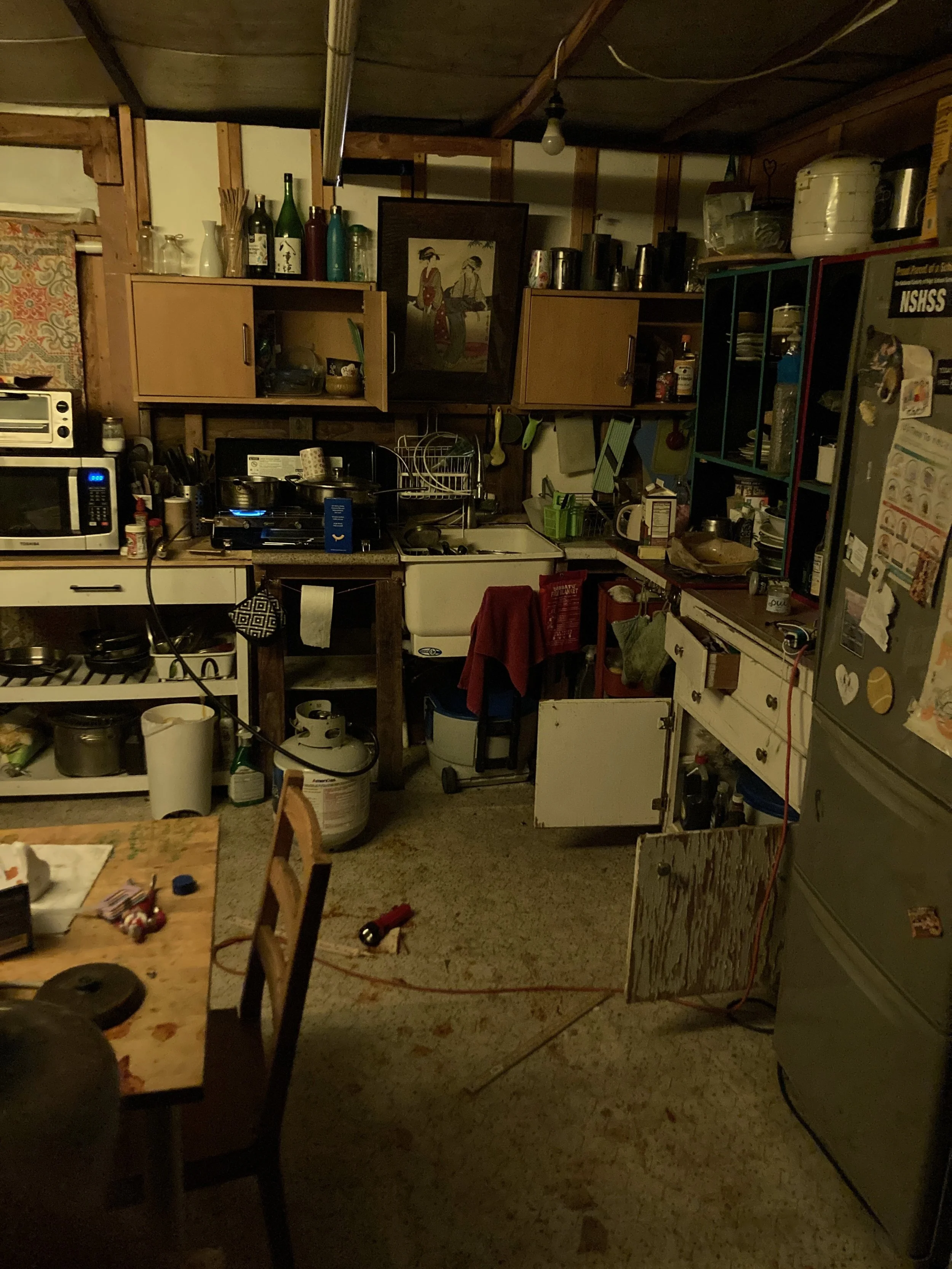
I lost my original living space and was made to live around a makeshift shack my mother constructed in the backyard. The photographs show the conditions: deteriorating cabinets, improvised appliances, exposed and unfinished areas, severe clutter, and a cramped space being used as our kitchen and living area. It was not a proper home.
This was not caused by poverty or the loss of our house. A functioning house was still on the same property. My mother chose to rent it to strangers instead of allowing her child to live in it.
I had no normal kitchen or family living space. I was expected to live in inadequate conditions behind the house while Airbnb guests occupied the usable portion of my own home.
By this point, even complete strangers who paid my mother had greater access to the house than I did.
My mother had a home for her child. She chose to rent that home out and make me live in a shack behind it.
-
My mother would leave me alone for extended periods, sometimes weeks at a time, without a consistently present adult responsible for taking care of me.
I was still a child.
There was no reliable adult making sure I ate regular meals, had enough food in the house, or was physically healthy. Food was frequently scarce or simply unavailable. I learned to go without eating, ration whatever was available, and manage basic needs that should never have been my responsibility in the first place.
My weight eventually fell to approximately 80 pounds. I became severely underweight.
This was not because I wanted to lose weight. I was a growing child who was not being adequately fed or supervised.
The effects did not disappear once food became more available. Years of hunger and being severely underweight fundamentally damaged my relationship with food and my body. I became intensely conscious of my weight and appearance and later developed serious problems with eating and body image.
My mother was responsible for providing food, supervision, and basic care.
Instead, I was left alone long enough and fed inconsistently enough that my body visibly deteriorated.
□ § III — OCDLosing Years of My Life to Rituals, Contamination Fears, and a Mind That Would Not Let Me Stop
-
Some obsessive-compulsive behaviors existed for as long as I can remember. Even as a young child, I had difficulty stepping on cracks in the pavement and felt compelled to follow arbitrary rules because doing otherwise felt deeply wrong.
The disorder became much more severe during the COVID-19 pandemic in 2020 and 2021, when I was approximately 11 to 13 years old.
Contamination fears began consuming my life. I washed my hands hundreds of times a day until my skin cracked and peeled. I repeatedly washed myself, cleaned objects, changed or rewashed sheets, and refolded clothes until they felt exact. I could spend six or seven hours in the bathroom because I could not convince myself that I was clean enough to stop.
I also developed intense religious and numerical compulsions. I repeated phrases such as “I love God” hundreds of times because I feared that stopping at the wrong number would result in punishment. I could delay leaving the house because 6:58 felt wrong while 7:00 felt safe.
During 2020 and 2021, I also became increasingly afraid of swallowing my own saliva. OCD made me feel that my mouth and saliva had somehow become contaminated. Instead of swallowing normally, I accumulated saliva in my mouth because swallowing it felt unbearable.
By 2022, when I was approximately 13 to 14, my OCD had become disabling.
There were days when I could not go to school because my mouth was full of saliva and I could not make myself swallow it. Going outside became extremely difficult. Ordinary activities such as eating, washing, getting dressed, leaving my room, or preparing for school could become hours-long battles with compulsions.
My contamination fears became so extreme that I once poured bleach directly onto my bed because I could not tolerate the feeling that it was contaminated.
I was no longer functioning normally. I was spending enormous portions of every day performing rituals, avoiding things I feared, or trying to make ordinary objects and actions feel “safe.”
At its worst, I remember begging God to kill me because I wanted to be freed from the OCD. I had reached a point where living inside my own mind felt unbearable.
This was not a preference for cleanliness or organization. By 2022, OCD interfered with my ability to attend school, leave my house, swallow normally, care for myself, and participate in ordinary life.
-
My recovery began during 2023, when I was approximately 14.
I started challenging individual compulsions rather than trying to defeat the entire disorder at once.
Coffee left an aftertaste in my mouth that made swallowing feel easier, so I used it to practice swallowing my saliva for several hours at a time. I gradually extended those periods. By mid-2023, I was able to swallow normally again after years of struggling to do something my body had once done automatically.
I began shortening my washing rituals as well. Six- or seven-hour bathroom routines became forty minutes, then twenty minutes, and eventually only a few minutes. Hundreds of daily handwashings became fifty, then fewer. I moisturized my damaged hands and watched the cracked skin gradually heal.
I also began using what I learned in biology against my contamination fears. Understanding that the immune system is designed to encounter microorganisms gave me a concrete way to challenge the idea that ordinary exposure to germs was catastrophic.
Recovery did not mean that every obsessive thought disappeared.
Even now, certain numbers can bother me. I sometimes feel uncomfortable stepping on cracks. I can still experience the urge to repeat or avoid something simply because it does not feel “right.”
The difference is that those thoughts no longer control entire days of my life.
In 2022, I could become trapped inside my house because I could not swallow my own saliva.
By 2023, I could swallow again, leave the house, attend school, and increasingly decide for myself when a ritual was finished.
After years in which OCD controlled some of the most basic actions of my life, regaining that ability to choose became one of the clearest forms of freedom I had ever experienced.
□ § IV — SEXUAL ASSAULTMy Mother Hired a Babysitter Friend Who Sexually Assaulted Me
-
Sarah Ann was one of my mother’s close friends from the same alternative and hippie social circles that had become increasingly involved in our household. I do not remember exactly when they first became friends, but by 2020 they had known each other for at least several years and appeared extremely close.
I was 12 years old at the time.
During the 2020 presidential election period, my mother planned to leave home for a trip that would last approximately a couple of weeks. Rather than arrange conventional childcare, she entrusted Sarah Ann with responsibility for me and left her to act as my babysitter while she was gone. She had already been squatting at my home for a few weeks at that point.
Sarah Ann was already behaving in ways that frightened me. I had been told that she was taking multiple medications, although I do not know what they were or what conditions they were prescribed for. I therefore do not make any claim about a specific diagnosis.
The night before the assault, Sarah Ann invited a male friend whom I did not know onto the property without my mother’s knowledge. They stayed in the backyard shack. I remember them yelling loudly, behaving erratically, and using substances that I believed were drugs, although I was a child and could not identify what they were.
I stayed in my bedroom and tried to avoid them.
By the following day, my mother was away, Sarah Ann had authority over me as my caretaker, and I was effectively alone in the house with an adult whose behavior had already made me feel unsafe.
That was the situation in which the assault occurred.
-
The following day, Sarah Ann came into my bedroom while my mother was away and she was responsible for taking care of me.
I was 12 years old.
She demanded that I get into bed with her and cuddle her. I told her no and made clear that I was uncomfortable. I had only been out of speech therapy for a few years and was barely beginning puberty. I did not want that kind of physical contact with an adult.
She did not respect my refusal.
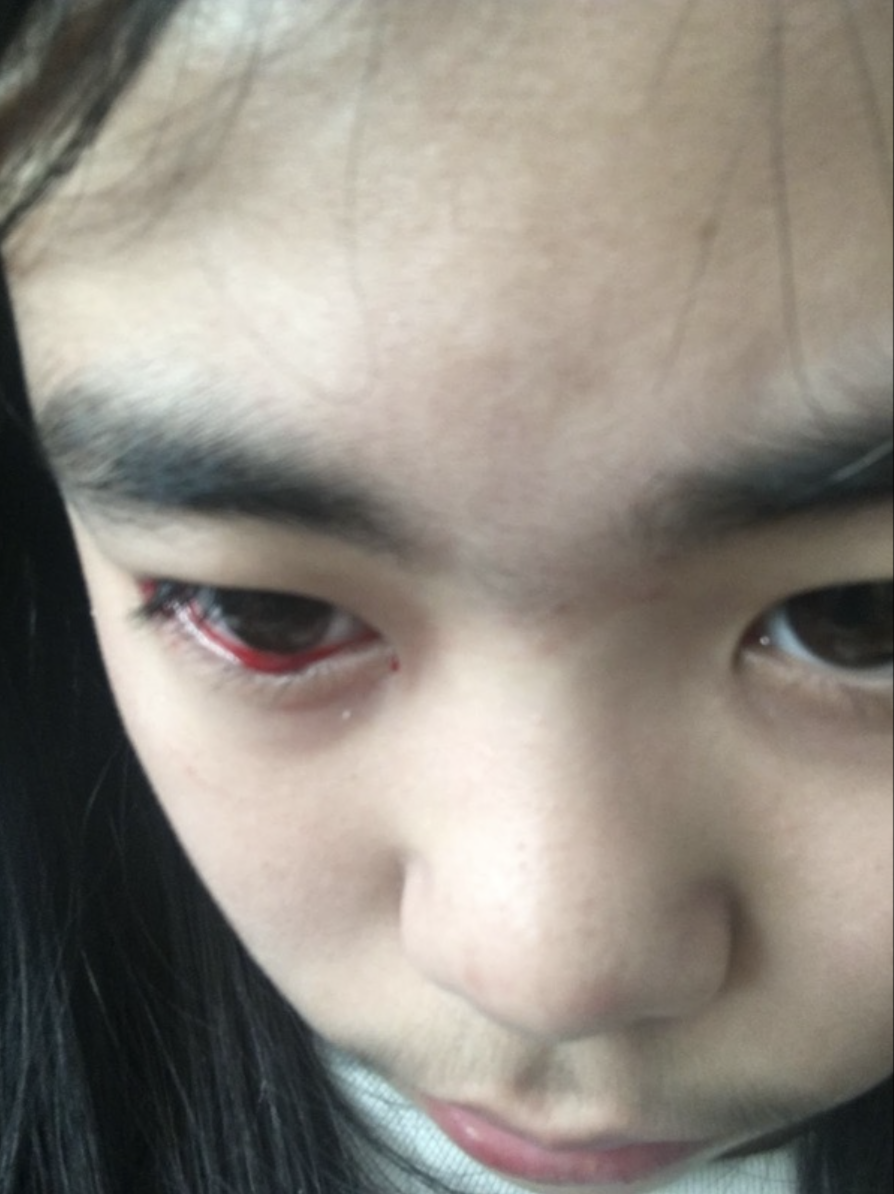
Sarah Ann groped me, climbed onto my bed, and forced her body onto mine. I tried to resist and get her off me. Instead of stopping, she became violent.She began punching and kicking me while I was underneath her.
I cried and repeatedly tried to make her stop. I was frightened, overwhelmed, and physically trapped beneath an adult who had been entrusted to care for me. What began with unwanted sexual contact escalated into a physical assault when I resisted her.
Eventually, I managed to force her off my body and get her away from me. She then ran out of my bedroom.
I immediately understood that something deeply wrong had happened. I had said no. I had tried to get away. She continued touching me and forcing herself onto me anyway, and when I resisted, she hurt me.I describe what happened as an attempted sexual assault accompanied by a physical assault. I had never experienced anything like it before.
-
Immediately after the assault, I called my mother and told her what Sarah Ann had done to me.
She did not believe me.
Sarah Ann contacted my mother soon afterward and accused me of skipping school and made other false claims about my behavior. My mother initially chose to believe Sarah Ann instead of her 12-year-old son, even though Sarah Ann was the adult she had personally entrusted to care for me.
I was terrified and did not feel safe remaining in the house, so I left and went to my father’s home.
Only after other roommates who had witnessed Sarah Ann’s behavior contacted my mother and corroborated parts of my account did she begin to acknowledge that something serious had happened.
But the danger did not end when I left.
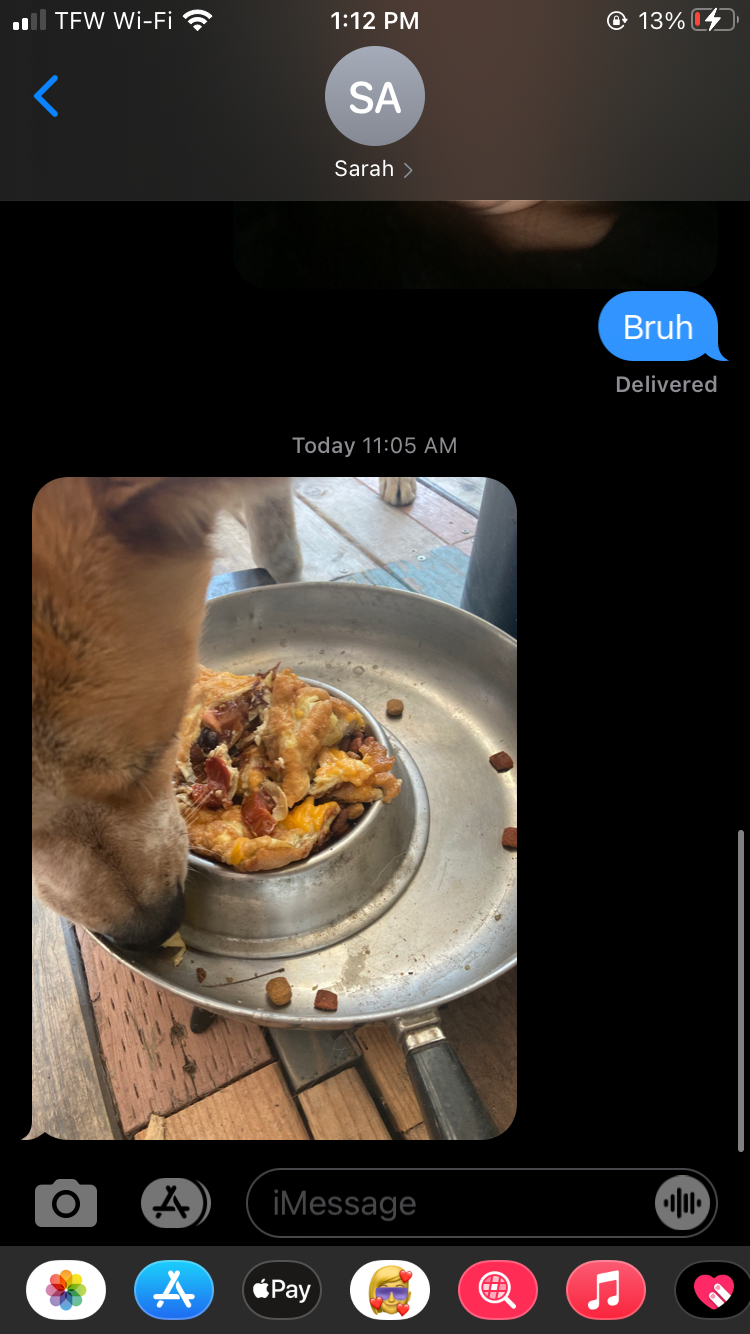
Sarah Ann began sending threatening and erratic voice messages to my father and other people connected to the house. She accused me of trying to kill her and made threats against me.
She then returned to my bedroom and shattered the exterior window to gain access to the room. She entered my space, took belongings from my room, and threatened to use my dog against me.
I had already escaped because I was frightened after being gr*ped, physically attacked, and subjected to attempted SA. Sarah Ann then continued pursuing the conflict after I was gone, damaged my bedroom to get inside, threatened me, and interfered with my belongings and my dog.
I was twelve years old.
Within the span of a single day, I was assaulted by the adult responsible for caring for me, immediately disbelieved by my mother when I reported it, forced to flee my own home for safety, and then confronted with further threats and destruction after I had already escaped.
-
My mother’s response did not end with disbelieving me on the day of the assault.
Even after other people in the house corroborated that Sarah Ann had become violent and dangerous, my mother continued to minimize what happened. She gradually acknowledged that something had occurred, but she refused to acknowledge the attempted SA I reported.
She has also tried to distance herself from responsibility by claiming that Sarah Ann was never really my babysitter.
That is not how I remember the arrangement. My mother was leaving for an extended trip. Sarah Ann had already been staying at our home, and my mother explicitly entrusted her with responsibility for me while she was gone. I was twelve years old. There was no other parent or regular caregiver in the house supervising me.
To this day, my mother continues to deny that Sarah Ann attempted to SA me and disputes that she was actually acting as my babysitter.
What makes that denial especially painful is that I reported the assault immediately. I did not wait years to first tell her. I called my mother directly after it happened, while I was frightened and trying to get away from Sarah Ann.
Her first response was not to protect me.
It was to believe the adult I was accusing.
Only after other people began confirming Sarah Ann’s dangerous behavior did my mother partially accept that something had happened. Even then, she never fully acknowledged what I reported or accepted responsibility for leaving me in Sarah Ann’s care.
I was twelve years old when I asked my mother to believe me.
Years later, I am still being forced to defend the fact that it happened at all.
-
higag20250815